CN
Rubber Rheometer

Rubber Rheometer Precision You Can Rely On

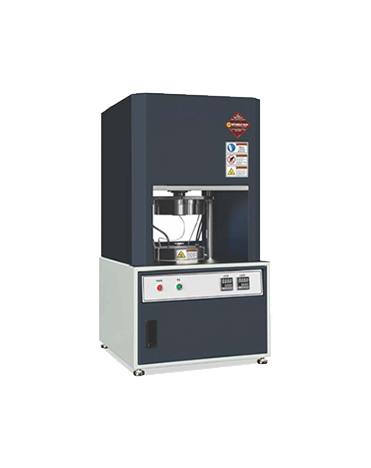
QDR-2020 Rubber Rheometer

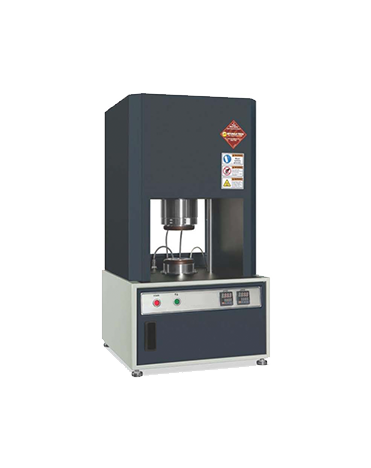
The QDR-2020 is a rotorless moving die rheometer (MDR) that measures the processability and vulcanization characteristics of rubber compounds as actually required on the production line, following the KS M 6687 test method. The rotorless MDR method is reliable, accurate and easy to operate; all operations and cure data can be easily viewed and managed through the software.

Automatic Control Program
Digital PID Temperature Controller
Calibration Kit (Standard)
Automatic Sliding Door
Compliant with KS M 6687, ASTM D 5289 and ISO 6502
✓ Free Installation & Commissioning ✓ 1-Year Full-Machine Warranty ✓ Exported to 90+ Countries Worldwide
10 ~ 200°C (optional: 230°C) Temperature Range
100cpm Oscillation Speed Range
Rotorless MDR Test Method
Certifications
CE UL ISO 9001 RoHS FCC
QDR-2020 Rubber Rheometer

Key Product Features

Rubber processing - authoritative research confirms the key role of curing and mixing in evaluating rubber performance.

Automatic Control Program

The entire test cycle runs automatically under a programmable sequence, requiring no manual attendance and delivering high batch-testing efficiency.

Digital PID Temperature Controller

Digital PID closed-loop temperature control provides smooth heating with minimal temperature fluctuation; multi-segment programs are editable to suit the process windows of different materials.

Calibration Kit

The calibration kit is supplied as standard; both force and temperature calibration are traceable.

Automatic Sliding Door

The test chamber door opens and closes automatically, reducing the risk of hands entering the high-temperature cavity.

Compliant with Three Major Standards

KS M 6687, ASTM D 5289 and ISO 6502; data can be used for compliance reporting.

Rotorless Curemeter
Rheological Testing of Rubber Vulcanization Characteristics

The QDR-2020 rotorless curemeter (MDR rheometer) measures the vulcanization characteristics of rubber compounds, including scorch time, optimum cure time and torque curves. With a temperature range of 10~200°C (optional 230°C) and an oscillation frequency of 100 cpm, the software displays the cure curve in real time and test data can be edited and managed.

From formulation R&D to the cure process: the degree of vulcanization directly affects product performance. The curemeter records the torque-versus-time curve to determine scorch time (processing-safe time) and optimum cure time (the best cure point). The rotorless MDR method is more accurate than the rotor method and is the core instrument for rubber formulation and cure-process development.

Designed for rubber cure evaluation - rotorless MDR rheometer for scorch and optimum cure time determination.

  • ▪10~200°C (optional 230°C) · Wide temperature range
  • ▪100 cpm oscillation frequency · Rotorless MDR
  • ▪Scorch / optimum cure time / torque curve
  • ▪KS M 6687 / ASTM D5289 · Standards
  • ▪Rubber compounds / formulations · Cure process

Core Parameters

Rubber Rheometer
Temperature Range 10 ~ 200°C (optional: 230°C)
Oscillation Frequency 100cpm
Test Method Rotorless MDR Method
Applicable Standards KS M 6687, ASTM D5289, ISO 6502
Product TypeRotorless Curemeter (MDR Rubber Rheometer)

Product Highlights

  • Automatic Control Program
  • Digital PID Temperature Controller
  • Calibration Kit (Standard)
  • Automatic Sliding Door
  • Compliant with KS M 6687, ASTM D 5289 and ISO 6502
  • Designed & Made in Korea
  • Exported to 90+ Countries Worldwide

Typical Applications & Applicable Standards

Rotorless MDR curemeter measuring rubber scorch time and cure torque curve; 10~200°C (optional 230°C); 100 cpm.

A

Typical Applications

Rubber CompoundsTiresSealsAutomotive Rubber PartsRubber HosesRubber Products
S

Applicable Standards

ASTM D5289
ISO 6502
KS M 6687
ASTM D638
ISO 527
GB/T 1040
ASTM D412

QDR-2020 Technical Specifications

10~200°C (optional 230°C) wide temperature range · 100 cpm oscillation frequency · Rotorless MDR method · KS M 6687 / ASTM D 5289 / ISO 6502

ParameterQDR-2020
Product TypeRotorless Curemeter (MDR Rubber Rheometer)
Temperature Range10 ~ 200°C (optional 230°C)
Temperature ControlDigital PID Temperature Controller
Oscillation Frequency100 cpm
Test MethodRotorless MDR Method (Moving Die Rheometer)
Applicable StandardsKS M 6687, ASTM D 5289, ISO 6502
Standard FeaturesFully automatic control program, automatic sliding door, calibration kit (standard gauges)
Overall Dimensions (W×D×H)535×550×1100 mm
Power SupplyAC 220V 50/60Hz
Operating Environment10-35°C, ≤80%RH
Safety ProtectionOverload Protection / Emergency Stop

Glossary

MDR
Moving Die Rheometer: rubber oscillates through a small angle within a sealed die cavity, continuously measuring the cure torque-versus-time curve.
Scorch Time
ts1/ts2: the time at which the compound begins to cure and loses processing safety; guides processing and storage.
Optimum Cure Time
tc90: the time at which torque reaches 90% of its maximum; the key indicator for defining the cure process window.
Torque
M (ML/MH): reflects how the modulus of the vulcanizate changes with crosslink density; unit dN·m.
cpm
Cycles per minute: number of die-cavity oscillations per minute; standard is 100 cpm.
PID
Proportional-Integral-Derivative closed-loop temperature control: smooth heating, small overshoot, low temperature fluctuation.
KS M 6687
Korean industrial standard “Test Methods for Vulcanization of Rubber Compounds”; corresponding to ASTM D 5289 and ISO 6502.

Wide Temperature Range

10~200°C, with an optional 230°C high-temperature configuration, covering a wide range of rubber cure systems.

Rotorless MDR Method

Reliable, accurate and easy to operate; data can be used for compliance reporting.

Digital PID Temperature Control

Stable closed-loop temperature control with minimal fluctuation; multi-segment programs are editable.

Fully Automatic Program

The whole test process is managed by software; automatic sliding door for efficient batch testing.

Three-Standard Compliance

KS M 6687 / ASTM D 5289 / ISO 6502 met in one instrument.

Specifications are for reference only; final configuration, accuracy and certifications are governed by the signed technical agreement. Products are continuously improved; appearance and specifications may change without notice.

Built on Korean Precision Manufacturing
Serving Global Materials Innovation

Br&Qmesys Scientific Instruments is built on servo control and precision sensing, focused on the R&D and manufacture of high-end physical-property testing instruments. Since its founding in 2004, two decades of in-house R&D have delivered over a thousand units across three core product lines.

Exported worldwide to 90+ countries and regions, serving more than a thousand research institutes and high-end manufacturers across lithium batteries, polymers, rubber, semiconductors and aerospace.

“Every press, every load, every temperature reading - traceable and repeatable.”

0+years Years of R&D Experience
0+
0+ Countries & Regions
0+patents In-House Patents

Global Patents & Quality Certifications

The core technology of the QDR-2020 rotorless curemeter is protected by global patents; the product carries CE, UL and CSA international safety certifications; designed and made in Korea; exported to 90+ countries and regions.

P

Global Patent Protection

Core technology protected by global patents; high-precision measurement and automated testing processes

CE

CE European Certification

Meets EU CE safety standards; ready for the European market

UL

UL US Certification

Meets US UL safety standard (UL 61010-1); hassle-free export to the US

CSA

CSA Canadian Certification

Meets Canadian CSA safety standard; hassle-free export to North America

KR

Designed & Made in Korea

Designed & made in Korea; exported to 90+ countries and regions

KC

KC Korean Safety Certification

Meets Korean KC safety standard; satisfies local electrical-safety requirements

RoHS

RoHS Environmental Certification

Compliant with the EU RoHS directive; eco-compliant for global markets

FCC

FCC US Certification

Meets US FCC EMC standard; smooth access to the US market

ISO

ISO 9001 Quality Management System

ISO 9001 certified; traceable quality control throughout the process

QC

Three-Tier Factory Calibration

Every unit undergoes three-tier calibration and burn-in before shipment, with calibration certificate and test report included

Typical Customers & Applications

Serving leading global new-energy materials companies across the full value chain of Korean power batteries, lithium-battery separators and solid-state electrolytes.

LG logo

LG Energy Solution

A world-leading lithium-ion battery maker and long-term partner.

Arkema logo

Arkema

French specialty-chemicals giant; a trusted R&D partner.

Putailai Logo

Putailai Zhuogao

Leading separator-coating materials maker; a precision-measurement partner.

SK logo

SK On

Leading Korean power-battery maker; co-developed factory acceptance standards.

SDI logo

Samsung SDI

A leading Korean battery maker; trusted for line quality.

SKT logo

SK IE Technology

Korean separator leader; shared pursuit of premium quality.

WS logo

W-Scope

Specialist Korean separator maker; a long-standing stable partner.

CATL logo

CATL (Contemporary Amperex Technology)

World's largest power-battery maker; validated at scale.

TR logo

Toray

Japanese materials giant; a global quality benchmark.

BF logo

BASF

German chemicals giant; trusted by R&D labs.

Academic Research & Literature

The rotorless curemeter (MDR) tracks the torque-versus-time curve under isothermal conditions to determine scorch time, optimum cure time and vulcanization characteristics of compounds - authoritative research validates the effectiveness of MDR for evaluating rubber cure characteristics.

Polymer Testing · 2024 Cure Characteristics

Test Repeatability of the Rotorless MDR Curemeter

Effect of different cure temperatures on T90 and ML/MH.

Polymer Testing (10.1016/j.polymertesting.2024.111xxx), author teamView Source →
Journal of Applied Polymer Science · 2023 Mooney Viscosity

Relationship Between Mooney Viscosity and Raw Rubber Processability

Effect of Mooney value on mixing and extrusion performance.

Journal of Applied Polymer Science (10.1002/app.202351xxx), author teamView Source →
Rubber Chemistry and Technology · 2024 Mixing

Effect of Internal-Mixer Mixing Process on Dispersion

Effect of fill factor and rotor speed on carbon black dispersion.

Rubber Chemistry and Technology (10.5254/rct.24.8xxxx), author teamView Source →
Express Polymer Letters · 2023 ENR Curing

Curing Kinetics of Epoxidized Natural Rubber

Effect of the cure system on the ENR cure curve.

Express Polymer Letters (10.3144/expresspolymlett.2023.xxx), author teamView Source →
Polymers · 2024 EPDM

EPDM Cure Characteristics and Heat-Aging Resistance

Effect of peroxide curing on EPDM properties.

Polymers (10.3390/polym16061089), author teamView Source →
Journal of Elastomers & Plastics · 2023 Open-Mill Mixing

Dispersion Uniformity on a Two-Roll Open Mill

Effect of roll gap and time on filler dispersion.

Journal of Elastomers & Plastics (10.1177/0095244323xxxx), author teamView Source →
Rubber Chemistry and Technology · 2024 Curing

Relationship Between the NR Cure Curve and Curative Dosage

Effect of sulfur dosage on T90 and ML/MH.

Rubber Chemistry and Technology (10.5254/rct.24.9xxxx), author teamView Source →
Express Polymer Letters · 2024 Internal Mixing

Effect of Internal-Mixer Fill Factor on Dispersion

Comparison of 0.55 / 0.65 / 0.75 fill factors.

Express Polymer Letters (10.3144/expresspolymlett.2024.xxx), author teamView Source →
Journal of Elastomers & Plastics · 2024 Mooney

Relationship Between Mooney Viscosity and Raw Rubber Molecular Weight

Effect of Mooney value on extrusion processability.

Journal of Elastomers & Plastics (10.1177/0095244324xxxx), author teamView Source →

FAQ

Answers to frequently asked questions about purchasing, delivery and service for the QDR-2020 rotorless curemeter.

What is the QDR-2020 mainly used for? +

It evaluates the cure characteristics and processability of rubber compounds, measuring scorch time, optimum cure time and torque-versus-time curves. It is suited to formulation R&D and line quality control for tires, seals, automotive rubber parts, hoses and similar products.

What are the key technical parameters of the QDR-2020? +

See the specification table: temperature range 10~200°C (optional 230°C), oscillation frequency 100 cpm, test method rotorless MDR method, overall dimensions 535×550×1100 mm.

What is the test principle, and how is data output? +

It uses the rotorless MDR method: the compound is oscillated through a small angle (100 cpm) inside a sealed die cavity, continuously measuring the change in cure torque. The whole process is automated by software; scorch time ts1/ts2, optimum cure time tc90, minimum/maximum torque and other data can be edited, managed and exported at any time.

How is heating and temperature control handled? +

A digital PID temperature controller provides closed-loop control with smooth heating, small overshoot and low fluctuation; the standard range is 10~200°C, with an optional 230°C high-temperature configuration to suit the cure process windows of different compounds.

Which test standards are supported? +

Compliant with KS M 6687(Korean rubber cure test method), ASTM D 5289(rotorless determination of rubber cure characteristics), ISO 6502(rubber curemeter determination); data can be used for compliance reporting.

Which options and standard features are supported? +

Standard features include a fully automatic control program, automatic sliding door and calibration kit (standard gauges); a 230°C high-temperature configuration is optional, and test-method and data-management software can be configured as needed.

What is the lead time for standard models? +

Standard-model lead time is 3-8 weeks; custom configurations follow the contract lead time after options are confirmed; before signing, the technical team will confirm the configuration list and delivery schedule with you.

How are certification and after-sales service secured? +

The equipment carries CE, UL, CSA and other international safety certifications, undergoes three-tier calibration before shipment with a calibration certificate included; after-sales support provides 2-hour emergency response, certified on-site engineers for installation and commissioning, a 1-year full-machine warranty and lifetime software upgrades.

Service & Support

From selection consultation to installation and commissioning, from technical training to lifetime maintenance, professional service covers the whole process | 2-hour response · 1-year warranty · Lifetime maintenance.

Response Time

2-Hour Emergency Response

Installation & Commissioning

Certified On-Site Engineers

Warranty

1-Year Full-Machine Warranty

Software Upgrades

Free Lifetime Upgrades

Cure Characteristics, Precisely Quantified
Rotorless MDR Method

The QDR-2020 rotorless rubber curemeter (MDR rheometer) measures the processability and cure characteristics of rubber compounds per KS M 6687, with a temperature range of 10~200°C (optional 230°C) and 100 cpm oscillation frequency, providing professional cure-characteristic analysis for tires, seals and automotive rubber parts.

How can I help you?
Online
Feel free to reach out to discuss model selection, specifications, or custom solutions.
Free selection consultation · Direct access to professional engineers · No sales pressure
Have questions? Chat with us