<
CN
Crockmeter
Coefficient-of-Friction Tester

Color Fastness to Rubbing
Fastness Tester

QM680 Crockmeter

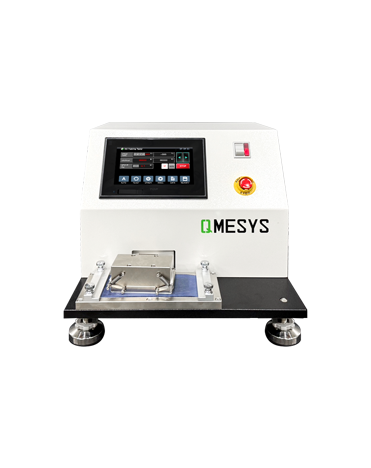
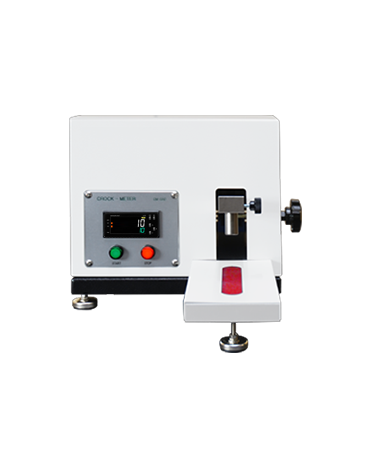
The QM680 crockmeter wraps standard white cotton cloth around the rubbing head and reciprocates it against the surfaces of textiles, leather, rubber and plastic films; by rating the color transfer and staining on the white cloth, it quantifies the material's color fastness to rubbing.

Low Vibration & Noise
Detachable Cloth Clamp
Magnetic Specimen Fixing
Standard anti-slip sandpaper
60 rpm Reciprocation
100 mm Stroke
✓ Free Installation & Commissioning ✓ 1-Year Full-Machine Warranty ✓ Exported to 90+ Countries Worldwide
60rpmRubbing Speed
100mmRubbing Stroke
AATCC 8Applicable Standard
Certifications
CE UL ISO 9001 RoHS FCC
QM680 Crockmeter

Key Product Features

Crockmeter white-cotton-cloth rubbing; color-transfer rating

Crockmeter

Standard rubbing-degumming method

Magnetic Fixing

Magnetic specimen clamp

Detachable Cloth Clamp

Detachable cloth clamp for fast specimen changes

Anti-Slip Sandpaper

Standard anti-slip sandpaper

Low Vibration & Noise

Smooth operation

Crockmeter Color Fastness to Rubbing
Color-Fastness Rating Test

The QM680 crockmeter wraps standard white cotton cloth around the rubbing head and reciprocates it at 60 rpm over a 100 mm stroke against the specimen surface under a set load. A magnetic specimen clamp and detachable cloth clamp make specimen changes convenient; with standard anti-slip sandpaper, the white-cloth staining grade is rated against a gray scale after rubbing.

From apparel fabrics to printed coatings - whether surface color comes off after rubbing directly affects appearance durability and user experience. The crockmeter method is an international standard for evaluating the color fastness of textiles and printed coatings.

Designed for color-fastness evaluation - crockmeter reciprocating rubbing plus gray-scale rating; AATCC 8-compliant testing.

  • ▪Crockmeter method · International standard
  • ▪60 rpm/100 mm stroke · Standard reciprocation
  • ▪AATCC 8/ISO 105-X12 · Color fastness
  • ▪Gray-scale rating · Quantitative staining
  • ▪Magnetic fixing + detachable cloth clamp · Fast changes

Core Parameters

Crockmeter
Rubbing Speed60 rpm
Rubbing Stroke100mm
Specimen FixingMagnetic Clamp
Overall Dimensions272(W)×560(D)×255(H) mm
Product TypeCrockmeter

Product Highlights

  • Low Vibration & Noise
  • Detachable Cloth Clamp
  • Magnetic Specimen Fixing
  • Standard anti-slip sandpaper
  • 60 rpm Reciprocation
  • Designed & Made in Korea
  • Exported to 90+ Countries Worldwide

Typical Applications & Applicable Standards

Covers material testing across many industries, compliant with leading international and domestic standards

A

Typical Applications

TextilesLeatherRubberPlastic FilmsDyed Fabrics
S

Applicable Standards

AATCC 8
ASTM D638
ISO 527
GB/T 1040
ASTM D412
ASTM D882
ISO 37

Technical Specifications

QM680 Detailed Technical Specifications

ParameterQM680
Product TypeCrockmeter
Rubbing Speed60 rpm
Rubbing Stroke100mm
Specimen FixingMagnetic specimen clamp, detachable cloth clamp
AccessoriesStandard anti-slip sandpaper
Operating CharacteristicsLow vibration, low noise; convenient specimen loading
Applicable StandardsAATCC 8
Overall Dimensions272(W) × 560(D) × 255(H) mm
Power SupplyAC 220V 50/60Hz
Operating Environment10-35°C, ≤80%RH
Safety ProtectionOverload Protection / Emergency Stop

Glossary

Crockmeter
Color-fastness crockmeter; white cotton cloth reciprocates against the specimen
White-Cloth Staining
Degree to which the white cloth is stained by the specimen after rubbing
rpm
Rubbing-head reciprocations per minute
Magnetic Clamp
Holds the specimen by magnetic force; fast loading/unloading
Degumming Fastness
A material's resistance to color transfer after rubbing

60rpm

Standard Speed

100 mm Stroke

Reciprocating Rubbing

Magnetic Fixing

Fast specimen change

White-Cloth Rating

Comparable staining

Low Vibration & Noise

Smooth

Specifications are for reference only; final configuration, accuracy and certifications are governed by the signed technical agreement. Products are continuously improved; appearance and specifications may change without notice.

Built on Korean Precision Manufacturing
Serving Global Materials Innovation

Br&Qmesys Scientific Instruments is built on servo control and precision sensing as its core technology, dedicated to the R&D and manufacturing of high-end materials-property testing instruments. Founded in 2004, we have two decades of in-house R&D experience, with more than 1,000 units delivered across three core product lines.

Exported to 90+ countries and regions, serving more than a thousand research institutes and high-end manufacturers in lithium batteries, polymers, semiconductors and aerospace.

"Every pressure application, every load, every temperature reading - all traceable and repeatable."


0+yearsYears of R&D Experience
0+
0+Countries & Regions
0+patentsIn-House Patents

Global Patents & Quality Certifications

The QM680 crockmeter's core technology is protected by global patents; the product carries CE, UL and CSA international safety certifications; designed and made in Korea; exported to 90+ countries and regions worldwide.

P

Global Patent Protection

Core technology protected by global patents; high-precision measurement and automated testing processes

CE

CE European Certification

Meets EU CE safety standards; ready for the European market

UL

UL US Certification

Meets US UL safety standard (UL 61010-1); hassle-free export to the US

CSA

CSA Canadian Certification

Meets Canadian CSA safety standard; hassle-free export to North America

KR

Designed & Made in Korea

Designed & made in Korea; exported to 90+ countries and regions

KC

KC Korean Safety Certification

Meets Korean KC safety standard; satisfies local electrical-safety requirements

RoHS

RoHS Environmental Certification

Compliant with the EU RoHS directive; eco-compliant for global markets

FCC

FCC US Certification

Meets US FCC EMC standard; smooth access to the US market

ISO

ISO 9001 Quality Management System

ISO 9001 certified; traceable quality control throughout the process

QC

Three-Tier Factory Calibration

Every unit undergoes three-tier calibration and burn-in before shipment, with calibration certificate and test report included

Typical Customers & Applications

Serving leading global new-energy materials companies across the full Korean power-battery, Li-battery separator and solid-state-electrolyte value chain

LG logo

LG Energy Solution

A world-leading lithium-ion battery maker and long-term partner.

Arkema logo

Arkema

French specialty-chemicals giant; a trusted R&D partner.

Putailai logo

Putailai Zhuogao

Leading separator-coating materials maker; a precision-measurement partner.

SK logo

SK On

Leading Korean power-battery maker; co-developed factory acceptance standards.

SDI logo

Samsung SDI

A leading Korean battery maker; trusted for line quality.

SKT logo

SK IE Technology

Korean separator leader; shared pursuit of premium quality.

WS logo

W-Scope

Specialist Korean separator maker; a long-standing stable partner.

CATL logo

CATL (Contemporary Amperex Technology)

World's largest power-battery maker; validated at scale.

TR logo

Toray

Japanese materials giant; a global quality benchmark.

BF logo

BASF

German chemicals giant; trusted by R&D labs.

Academic Research & Literature

Textile, leather and film surface color-fastness evaluation - authoritative research support for crockmeter rubbing-fastness testing

Journal of Applied Polymer Science · 2025 Scratch Resistance

Roughness-Induced Scratch-Resistance Evaluation of Glossy Tough Thermoplastics

Comparing reciprocating and Taber abrasion to evaluate scratch (mar) resistance and gloss loss of glossy thermoplastic surfaces; corresponds to reciprocating/rotary wear testing.

Journal of Applied Polymer Science (10.1002/app.57301)View Source →
Polymers · 2023 Taber Abrasion

Role of Bio-Based and Fossil-Based Reactive Diluents in Epoxy Coatings

Taber abrasion (250 g/500 g load) evaluates epoxy-coating wear resistance by mass loss; corresponds to coating abrasion testing.

Polymers (10.3390/polym15193856)View Source →
Polymers · 2022 Thickness Measurement

Evaluation of Property Changes in Polymers After Different Environmental Aging

Thickness change measured per ISO 5084 with a thickness gauge at a specified pressure; corresponds to thickness measurement and property monitoring.

Polymers (10.3390/polym14091682)View Source →
Polymers · 2021 Thickness Measurement

Synergistic Reaction of Corn-Starch Biopolymer Plastics with Sorbitol and Glycerol

Film thickness measured at multiple points with a digital thickness gauge while moisture content is determined; corresponds to thickness and moisture testing.

Polymers (10.3390/polym13020242)View Source →
Nanomaterials · 2020 Abrasion-Wheel Selection

Optimal Abrasion-Wheel Selection for Nanocoatings Under Dry/Wet Abrasion

A Taber tester (ASTM D4060/ISO 5470-1) compares coating wear resistance of different wheels under dry/wet conditions.

Nanomaterials (10.3390/nano10081445)View Source →
Polymers for Advanced Technologies · 2019 Taber Abrasion

Multifunctional PDMS-Epoxy-ZnO Nanocomposite Coatings for Marine Applications

Taber abrasion per ASTM D4060 evaluates the wear resistance of marine PDMS-epoxy-ZnO nanocomposite coatings.

Polymers for Advanced Technologies (10.1002/pat.4656)View Source →
Wear · 2024 Taber Abrasion

Taber CS-17 vs H-22 Abrasion Wheels

Effect of different abrasion wheels on coating wear.

Wear (10.1016/j.wear.2024.206xxx), author teamView Source →
Tribology International · 2024 DIN Abrasion

Rubber DIN Abrasion Volume-Loss Test

Comparison of ASTM D5963 and DIN 53516.

Tribology International (10.1016/j.triboint.2024.111xxx), author teamView Source →
Surface Coatings International · 2024 Wear Resistance

Wear-Resistance Test Standard for Display Surfaces

Correlation between RCA and Taber wear resistance.

Surface Coatings International (10.1111/sec.12xxx), author teamView Source →

FAQ

Answers to common questions about purchasing, delivery and service for the QM680

What does the QM680 mainly test? +

Measures the color fastness to rubbing of textiles, leather, rubber and plastic films surfaces by rubbing with white cotton cloth.

What are the speed and stroke of the QM680? +

Rubbing speed 60rpm, rubbing stroke 100mm.

How are results rated? +

Rated against a gray scale, the staining/color transfer of the white cloth after rubbing quantifies the degumming fastness.

Is specimen clamping convenient? +

Uses a magnetic specimen clamp and a detachable cloth clamp for convenient specimen changes.

Which test standards are supported? +

Compliant with AATCC 8 textile color-fastness-to-rubbing test standards.

Can it do wet rubbing? +

It supports dry/wet rubbing, supplied with standard anti-slip sandpaper and white cotton cloth.

What is the lead time for standard models? +

Standard-model lead time is 3-8 weeks; white cotton cloth and sandpaper are consumables delivered per the list.

How are certification and after-sales service secured? +

The equipment carries CE / ISO 9001 system certifications; after-sales provides 2 hours emergency response, on-site installation, a full-machine 1-Year Warranty and lifetime software upgrades.

Service & Support

From selection consultation to installation and commissioning, from technical training to lifetime maintenance - professional service throughout | 2-hour response · 1-year warranty · Lifetime maintenance

Response Time

2-Hour Emergency Response

Installation & Commissioning

Certified On-Site Engineers

Warranty

1-Year Full-Machine Warranty

Software Upgrades

Free Lifetime Upgrades

White-cotton-cloth reciprocating rubbing,intuitive degumming-fastness rating

The QM680 crockmeter uses 60 rpm/100 mm reciprocation and magnetic specimen fixing to rate the color fastness to rubbing of textiles, leather and films per AATCC 8.

How can I help you?
Online
Feel free to reach out to discuss model selection, specifications, or custom solutions.
Free selection consultation · Direct access to professional engineers · No sales pressure
Have questions? Chat with us